Busch Gardens
- 4.3
- Rating
- 1.00M
- Installs
- Free
- Price

 Analysis by App-foxy
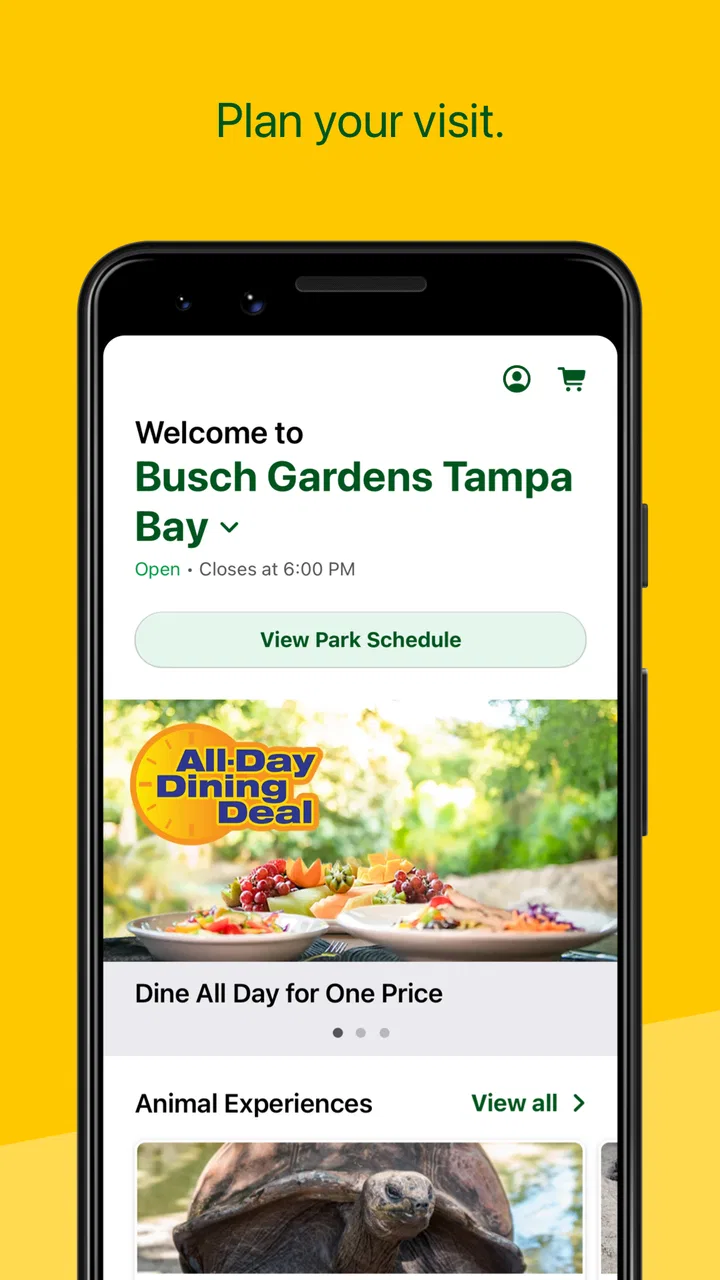
Busch Gardens is the kind of travel app I would install before a park day, not because it replaces every other planning tool, but because it puts the information I need while moving around the park in one focused place. Its main value is practical: maps, wait times, and park hours are much more useful when they are connected to the destination I am actually visiting. Instead of switching between a general map, a browser search, and a handwritten plan, I can use one park-specific companion from SeaWorld Parks & Entertainment Inc.
That focus also shapes my expectations. This is a free Travel & Local app for Busch Gardens, rated for Everyone, and it has been available since December 16, 2011. It is not trying to be a general vacation organizer or a replacement for every family travel tool. I see it as a day-of-visit utility: something I would check before leaving, open repeatedly inside the park, and keep available when plans change.
How Busch Gardens earns trust before a park visit
Trust matters more in a travel app than it first appears. I may use it when I am tired, carrying bags, coordinating with children, or trying to decide whether a long walk is worthwhile. A wrong assumption about opening hours or a stale wait-time screen can affect the whole day. Busch Gardens benefits from being tied directly to the park brand rather than presenting itself as an anonymous map service. That does not make every screen automatically perfect, but it gives the app a clear purpose and a recognizable developer behind it.
You May Also Like

 Blood Strike: 2.5 Anniversary
Blood Strike’s Loadouts Turn Every Drop Into a Tactical Gamble
A close look at Blood Strike’s custom loadouts: how fast access to signature weapons reshapes its battle royale rhythm, rewards preparation, and narrows the gap between fights.

 Pandora - Music & Podcasts
Pandora’s Music Is Easy to Start, but Harder to Recover
Pandora’s strength is its low-effort path from a seed to a station. Its weak spot is how much confidence it asks you to place in connection, setup, and quiet recovery.

 8 Ball Pool
 Is Built on Rivalries, Rematches, and Routine
A close look at the rivalries, rematches, shared routines, and unanswered safety questions that turn a quick pool match into a persistent mobile community.

 Samsung Music
’s Quiet Strength Is Playing What You Already Own
Its reach comes less from spectacle than from dependable access to a personal library. That simplicity is both the app’s strongest retention engine and its ceiling.

 AccuWeather: Weather Radar
AccuWeather Review: A Quick, Clear Forecast for Everyday Decisions
For everyday plans, the best forecast is the one you can understand quickly. AccuWeather makes rain timing, radar, and local conditions easy to act on, with a few trade-offs.

 Hill Climb Racing
Why Hill Climb Racing Still Turns Crashes Into One More Run
A tiny car, a bumpy hill and one more upgrade: Hill Climb Racing keeps resurfacing because its simple chaos makes every near-miss feel personal.
More From Our News Desk



The app has an average rating of 4.3 from around 7,200 ratings, with roughly 2,300 written reviews, and it has passed the one-million-install mark. Those figures suggest that it is not an obscure experiment used by only a handful of visitors. I still would not treat popularity as proof that every update works smoothly on every phone. For me, the more meaningful sign is whether the app helps with the specific decisions that create friction during a Busch Gardens visit.
The current release is version 7.1.17.117525 and requires at least OS 9. That minimum requirement is worth checking before a trip, particularly if I am relying on an older spare phone for navigation. I would rather discover compatibility at home than at the entrance. Since the app is free, installing it in advance is an easy way to test whether it opens comfortably, whether the text is readable, and whether the layout makes sense to everyone in my group.
I also like that the app’s purpose is immediately understandable. The store summary points to maps, wait times, and park hours, while the short description identifies Busch Gardens. There is no need to guess whether I am downloading a ticket marketplace, a social feed, or a broad city guide. That clarity is useful from a trust perspective: the closer an app stays to a visible job, the easier it is for me to judge whether I actually need it.
What I check before leaving home
My first step would be to install Busch Gardens on a reliable phone rather than waiting until I am standing near the gate. I would open the map, look at the park layout, and decide which attractions or areas matter most to my group. This is more effective than building a rigid route from memory because a park map helps me understand the physical relationship between areas. If someone in the group has limited energy, a stroller, or a preference for fewer back-and-forth walks, that early look can shape a calmer plan.
I would also check the park hours before committing to a schedule. Hours are not a minor detail: they determine whether an early arrival, a late meal, or a final attraction is realistic. I would still treat the displayed hours as something to verify close to the visit, especially if my plans depend on a narrow window. The app is a convenient first check, but I would not build an expensive trip around a single glance at any digital schedule.
A useful preparation habit is to agree on priorities before opening the wait-time view. A group can waste time refreshing numbers without deciding what matters most. I would choose one or two must-do attractions, then use the map and wait information to fill the gaps around them. That turns the app from a source of constant distraction into a planning aid. It also prevents the common mistake of crossing the park repeatedly because a different attraction briefly looks more attractive.
Using the map without letting it control the day
The map is likely to be most valuable when I use it for orientation rather than treating it as a perfect walking-time calculator. In a busy park, the shortest line on the screen may not be the best choice if reaching it requires a long detour through crowded paths. I would compare the attraction’s position with the rest of my plan, then ask whether the saved queue time is worth the extra walking. That small trade-off is easy to miss when looking only at a list of wait times.
I would use the map at natural transition points: after entering, following a meal, and before leaving one area. Constantly staring at a phone can make the visit less enjoyable and can cause a group to separate. A quick orientation check is usually enough. If I am with children, I would show them the general direction before walking rather than handing over the phone for the entire journey. The app should support the day, not become the day.
Another practical approach is to use the map to create meeting expectations. If a group splits temporarily, a clearly recognizable area on the map is more useful than saying “meet somewhere near the rides.” I would choose a visible landmark or a defined park area and communicate it before anyone wanders off. The app cannot solve every coordination problem, but its visual layout can make vague plans more precise.
Wait times: helpful signals, not promises
Wait times are where I would expect the greatest benefit and the most potential frustration. A displayed estimate can change while I am walking toward an attraction, and the number may not reflect every pause or operational interruption. I would use it to compare options, not to calculate the exact minute my group will board. That distinction keeps the feature useful without making it responsible for expectations it cannot reasonably guarantee.
My preferred workflow would be to check wait times when I am already deciding between nearby options. If one attraction has a clearly shorter wait and fits the route, I can make a sensible switch. I would be less inclined to cross the entire park for a small difference. The best use is not chasing every fluctuation; it is spotting a worthwhile opportunity that matches where I already am.
Families should also think about the rhythm of the day. A wait-time screen may encourage a group to prioritize attractions continuously, but meals, shade, rest, and bathroom breaks are part of a successful visit too. I would use the app to protect time for those needs rather than filling every open space with another queue. This is one of the less obvious advantages of having live-looking planning information: it can help me see where I have flexibility, provided I do not turn the numbers into a competition.
If the app feels slow or the displayed information seems out of step with what I see around me, I would stop treating it as the deciding authority. I would ask staff for clarification when a specific attraction matters greatly. That is not a failure of the app; it is a sensible backup for any digital tool used in a changing physical environment.
Data-sensitive moments and visible choices
When I review a travel app, I pay attention to moments where it may ask for access, location context, or an account. I do not assume that a permission request is harmless simply because the app is associated with a familiar park. I read each prompt and consider whether the requested access is necessary for what I want to do. If I only need to inspect hours or a map, I prefer not to grant more access than that task requires.
The most trustworthy experience is one where choices are understandable rather than hidden behind pressure. If a feature works without an account, I would use it that way. If an account becomes useful for a particular planning task, I would want to know what I gain before registering. I would also avoid entering personal details merely to explore the app. A park visit already involves enough logistics; an app should not make me surrender information without a clear reason.
Location is a particularly sensitive example. A map can be useful even when I am planning from home, while location-based convenience may matter more once I am inside the park. I would decide based on the feature I am actually using. If I do not need location-aware help, I would keep that choice off. If I enable it for the visit, I would review the setting afterward rather than leaving every temporary permission untouched indefinitely.
I would apply the same caution to notifications. Reminders about a visit can be convenient, but repeated alerts can become noise, especially for a family sharing one device. I prefer to enable only notifications that have a clear benefit and silence them when the park day is over. That habit gives me more control and makes it easier to notice an alert that genuinely matters.
Who will get the most from it?
Busch Gardens is a strong fit for first-time visitors who want a simple orientation tool. The combination of a park map, wait-time information, and hours addresses the three questions I would ask most often: where am I going, how long might it take, and is the park operating when I expect it to be? It is also useful for returning visitors who know the attractions but want to reduce unnecessary walking or make better use of a limited visit.
Parents and group organizers may find it especially helpful because the app can become a shared reference point. Instead of explaining the whole park from memory, I can show the map, agree on priorities, and make decisions together. The benefit is not that the app creates a perfect itinerary. The benefit is that everyone can see the same general picture when plans need to change.
It is less suitable for someone who wants a broad travel planner covering hotels, flights, restaurant reservations, and multiple destinations. Busch Gardens is deliberately narrower. I would use a general travel app for the larger trip and keep this one for the park itself. Likewise, visitors who prefer to stay completely offline or avoid phone use during leisure time may find a printed plan and staff guidance more comfortable.
A realistic day using the app
Imagine arriving with a family group that has one must-see attraction and several flexible choices. Before entering, I check the hours and look at the map so I understand the direction of the priority area. Once inside, I avoid stopping in the entrance flow to build a complicated schedule. I move toward the first area, then check wait times only when I am ready to choose the next activity.
After the first attraction, the group wants lunch and a quieter break. Rather than immediately searching for the shortest queue, I use the map to see what is nearby and plan the next section of the visit around that pause. Later, if a favored attraction shows a reasonable wait and is on the way toward another area, I choose it. If the number changes by the time I arrive, I have not lost the whole day because the route was already sensible.
Near closing, I check the hours again and avoid assuming that every attraction remains available until the final moment. I communicate a meeting point before anyone separates, keep the phone accessible, and stop using the app once it no longer adds value. This workflow is deliberately modest. It uses the tool for decisions where it is strongest and leaves room for the unpredictable parts of a real park day.
Where alternatives can be better
A general map service may be better when I need directions from a hotel, public-transit planning, or a complete route across a city. A browser search may be faster for a single basic question if I do not want to install anything. A printed park map may be preferable for a group that wants to share one physical reference without managing battery life or screen visibility.
Even so, those alternatives do not necessarily provide the same park-focused combination of orientation, current operating information, and wait-time planning in one place. That is the reason I would keep Busch Gardens installed for the visit. Its advantage is not breadth; it is context. The trade-off is that the app becomes much less useful outside the park or when I need broader travel services.
I would also avoid making it the only source of truth for a high-stakes detail. If a particular hour, attraction, accessibility need, or group arrangement is critical, I would confirm it through the most direct available channel and ask park staff when I arrive. The app can reduce uncertainty, but it cannot remove the need for judgment.
My cautious verdict
After weighing its purpose and limitations, I see Busch Gardens as a sensible free companion for a Busch Gardens visit. The developer is SeaWorld Parks & Entertainment Inc., the audience rating is Everyone, and the app has enough adoption to feel established rather than experimental. Those facts support confidence that it is worth trying, while the focused feature set makes it easy to understand what it is meant to do.
My main recommendation is to use Busch Gardens as a flexible reference, not as an automatic itinerary. Check the hours before leaving, study the map early, use wait times for nearby decisions, and keep control over permissions, notifications, and any account choices. Those habits make the app more useful and reduce the frustration that comes from expecting changing park information to behave like a fixed timetable.
I would recommend it to first-time visitors, families, and anyone who wants less wandering during a busy day. I would skip it if I only need general travel directions, strongly prefer paper planning, or do not want another app on my phone. For the right user, its narrow focus is exactly its strength. It gives me a practical way to understand the park, adapt when conditions change, and make informed choices without pretending that a screen can replace the experience itself.
FAQs for Busch Gardens
01What is Busch Gardens and what can I expect from the app?
Busch Gardens is a theme park app designed to enhance your visit to the park. It offers interactive maps, real-time wait times for rides, show schedules, and dining options. By using the app, you can plan your day effectively, ensuring you don't miss out on any attractions or events during your visit.
02Is the Busch Gardens app free to download and use?
Yes, the Busch Gardens app is completely free to download on both Android and iOS devices. While the app itself offers free access to various features, certain in-app purchases or park-related expenses might require payment, such as purchasing tickets or booking special experiences.
03What features does the Busch Gardens app offer for planning my visit?
The Busch Gardens app provides several features to help plan your visit, including interactive maps, ride wait times, and event schedules. You can also use the app to find dining options, set reminders for shows, and receive notifications about special events or promotions happening in the park.
04How does the app enhance my experience inside Busch Gardens?
Inside Busch Gardens, the app acts as a personal guide, offering real-time updates on ride wait times and show schedules. It helps you navigate the park with ease using interactive maps, and you can set alerts for your favorite attractions, ensuring a seamless and enjoyable experience.
05Can I purchase tickets directly through the Busch Gardens app?
Yes, the Busch Gardens app allows you to purchase tickets directly from your device. You can buy single-day tickets, annual passes, and even book special experiences. The app provides a secure platform for transactions, making it convenient to plan your visit ahead of time.
Pros
- Immersive virtual roller coaster experience.
- Stunning graphics and realistic sound effects.
- User-friendly interface and navigation.
- Regular updates with new attractions.
- Educational elements about wildlife.
Cons
- Requires a high-performance device.
- Large download size may take time.
- In-app purchases can be costly.
- Occasional glitches in some features.
- Limited offline functionality.

Busch Gardens
Gallery